How to Lead Through AI Disruption: Executive Field Manual
You don't need another think-piece on the future of AI. You need a field manual for this quarter, while your competitors automate, your team anxiously checks LinkedIn, and your board asks what your AI edge actually is. Leading through AI disruption is not about predicting the next breakthrough. It is about building organizational velocity: the ability to sense change, decide faster, and reconfigure resources before the window closes. What follows are the operating principles leaders are using to navigate Tesla-speed disruption right now. No hype. No jargon. Just what turns AI anxiety into execution advantage.
## Why "change management" is the wrong frame now
For thirty years the executive playbook for disruption was change management: assemble the committee, build the roadmap, sequence the rollout over quarters. That model assumed change arrived in waves you could see coming and absorb on a schedule. AI does not arrive on a schedule. A capability that did not exist in January is reshaping your competitor's cost structure by spring. Frameworks built for periodic change break under continuous change, because by the time the committee reports back, the ground has moved again. The first shift is to stop treating change as an event and start building for it as the permanent condition.
## The real shift: from command to orchestration
Here is the line at the center of the book and the center of this moment: command is dead, orchestration is the new edge.
Command-and-control leadership worked when information moved at human speed and the person at the top could reasonably hold the whole picture. AI collapses that. It processes more in a second than a team does in a week, and the edge now belongs to leaders who orchestrate rather than direct. They design the conditions for speed, push decisions to the edge where the context lives, and treat AI as a partner in the work rather than a tool to be supervised. Orchestration is not a softer version of command. It is a different operating system.
## Three moves that separate fast organizations from stuck ones
1. Cut decision latency before you cut anything else. Most organizations are not slow because their people are slow. They are slow because every decision climbs the org chart for approval. Find the decisions that do not need you and stop making them. Speed compounds.
2. Decide where AI runs, where humans check, and who owns the outcome. The organizations getting value from AI are not the ones using the most of it. They are the ones that drew a clear line: where the model runs unsupervised, where it needs a human in the loop, and who is accountable when it is wrong. Ambiguity there is what stalls pilots and burns trust.
3. Shorten the distance between sensing and acting. The advantage in a fast market is not seeing change first. It is the gap between seeing it and reconfiguring around it. Build the muscle to move resources, attention, and people toward a shift in days, not planning cycles.
## Where to start this week
Pick your single biggest bottleneck. Not a transformation program. One bottleneck. Do decisions pile up on your desk? Start with decision latency. Do your AI pilots never reach production? Start with ownership and the human-AI handoff. Does the organization see change late? Start with sensing. The leaders who come through this period in front will not be the ones who had the best forecast. They will be the ones who built the velocity to respond no matter what the forecast missed.
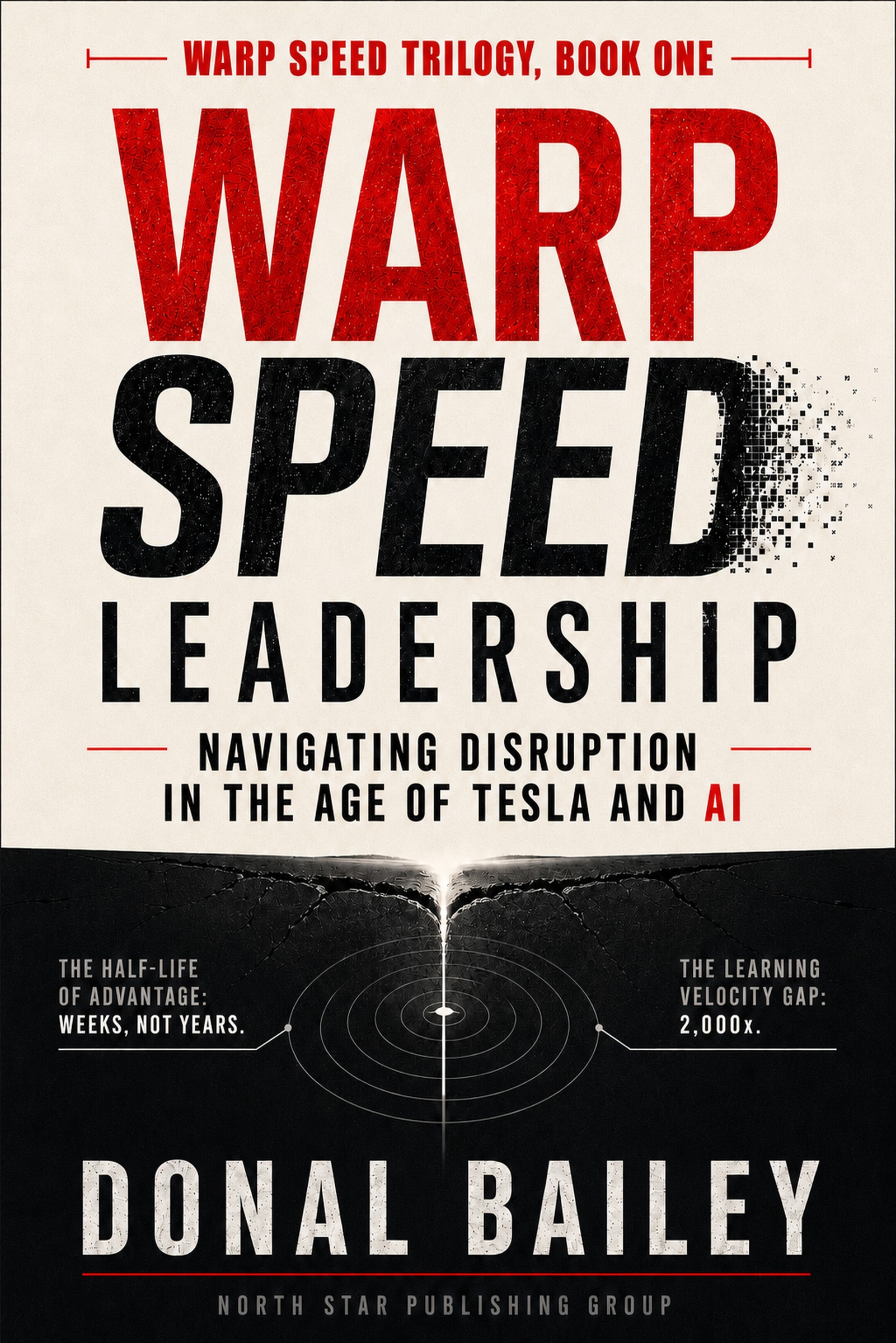
The full set of operating principles is in Warp Speed Leadership. If you want a practical starting point, the free AI Leadership Prompt Pack at warpspeedtrilogy.com turns these ideas into prompts you can use this week.